Tuesday, 21 September 2021

Why Do You Install Solar Pool Exchangers for Pool Water Heating?

Generally, pools and spas have additional amount of chlorine and bromine. It seems difficult to maintain the flow requirements at the pool or hot tub. That’s why flat plate solar heat exchangers aren’t ideal for them. This is where a special high flow pool heat exchanger comes in handy.

A solar pool exchanger can handle the higher secondary flow and high levels of Chlorine efficiently. It has the better flow characteristics, making it ideal for solar pool water heating. A titanium solar pool heat exchanger is recommended for applications that use salt water. This is highly resistant to chlorine and salt water.
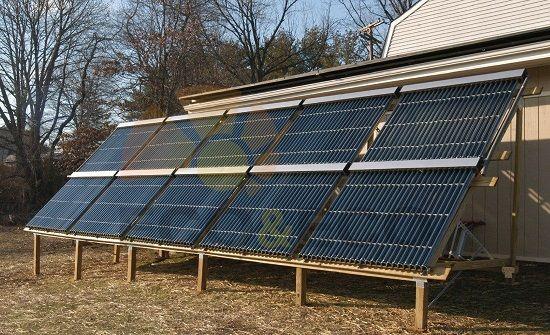

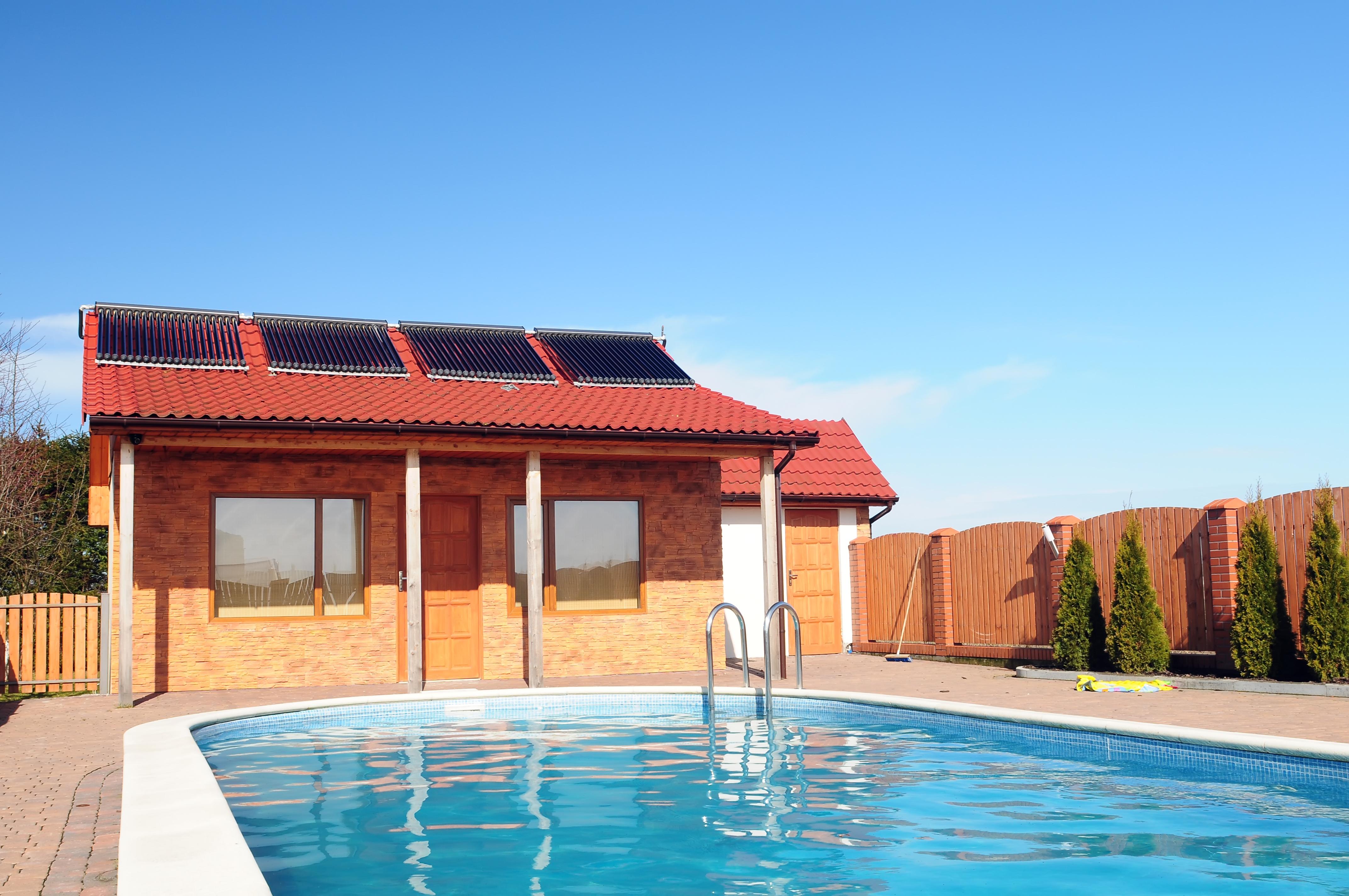
Why Do You Consider Installing Solar Pool Exchangers for Solar Pool Heaters?

Northern Lights solar pool exchangers are usually designed to operate at high secondary side fluid velocities with low pressure drops. They come with a helical coiled tube design, making it unique from other shell and tube heat exchangers available. Their exceptional design ensures highly efficient heat transfer performance and diversity in their uses.

If you’re looking to maximize the overall performance of solar pool exchanger, you should get it installed in a counter-current flow process. However, the hot fluid flows through the tube or the primary side whereas the cold fluid makes its way through the shell or secondary side. For example, the pool water needs to flow through the shell side and the boiling water flows through the tube side in a swimming pool.

What are The Special Features?

Solar pool exchanger has high heat transfer heat exchanger tubes and smooth shell that ensures high velocities inside the unit. That’s why this heat exchanger is considered as a trustworthy, cost-effective, and efficient way to transfer heat in an indirect way between solar heating or boiler circuit and any spa or pool circuit.

What are the Main Reasons Behind the Installation of Solar Pool Exchangers?

  • High efficient and co-efficient up to 14000 w/m2 deg C
  • Heat exchange capacity three to seven times than the traditional equipment
  • Stainless steel and/or titanium material enduring high temperature, pressure, and corrosion
  • Helix screw thread elasticity heat exchange eliminating stress
  • Big volume of flow
  • Easy installation process and durability
  • 5.5m/s design flux speed and less dirt
  • ASME standard VIII-1

What are The Design Parameters of Solar Pool Exchanger?

There are four pool exchanger design parameters available i.e.

  • Shell side pressure – 60 PSI (4 bar)
  • Shell side temperature – 140F (60C)
  • Tube side pressure – 150 PSI (10 bar)
  • Tube side temperature – 250F (120C)

Bottom Line –

Are you looking to purchase solar pool heaters? And need professional help with solar pool exchanger sizing? If yes, please feel free to contact Northern Lights Solar Tubs right now at +1 (800) 317-9054. We’ll get back to you right away with a free design estimate best suiting your pool heating requirements.

Tuesday, 7 September 2021

Why Do You Buy Solar Water Heaters?

Want to go green for residential water heating purposes? Likewise every homeowner, you might be tempted to rely on the sun for heating and energy requirements. Despite the increase in renewable and sustainable forms of energy being available, the overwhelming numbers of homeowners stay reluctant when making the switch. More often homeowners overlook the use of solar water heaters.


But you’ll get several benefits by switching to solar water heating systems. One of the main benefits is there’ll be significantly less energy bills. Though you’re going to use the solar energy to supply 60% of your home’s hot water needs, you’ll minimize your monthly energy consumption. It will result in major reduction in your monthly bill, making the solar water heating alternative economically viable.

This is where Northern Lights solar water heaters come in handy. These heating kits are specifically engineered to ensure optimal performance. However, they’re safe to operate. Solar water heating packages are available with every component you need to install them on your own.

The main advantage of these solar water heaters is that they can be installed by almost everyone. This means, you won’t need to be qualified and require any special tools for the installation. As a result, you’re going to save typical expenses of installation. This includes in the payback of your investment in a solar water heater. If you’re not self sufficient to install solar powered water heating system, you can take help from your friends or near and dear ones. However, you won’t need any licensed solar contractor for this task.

The components included in the solar water heating kits like stainless steel solar pipe make it easy for you to set up. This piping is made from corrugated stainless steel and comes with ¾” EPDM insulation and protective coating. It includes heat sensor wiring.


When you use this piping, you won’t need to get stressed about leaks and soldering. All you need is a wrench to connect the fittings and a high temperature gasket to make connection between fittings ensuring a leak-free sealing.

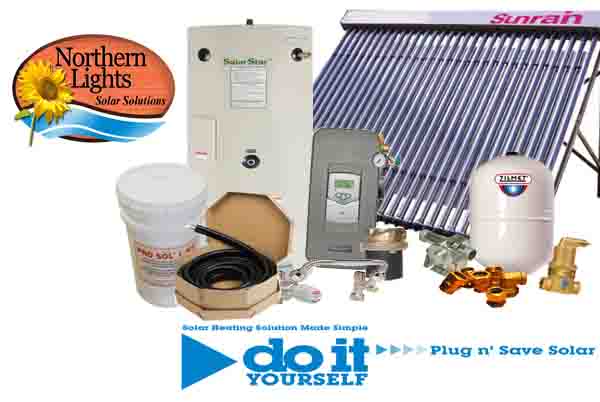
Northern Lights solar water heating kits have Sun Rain high temperature solar vacuum tube collectors, Re Sol Pump Station and the BS digital differential controller. Another important part of this system is the Solar Water Heater with built-in heat exchange and 4.5 KW additional heating element.

You can get the installation done by connecting the solar collector to the pump station and the pump station to the solar water tank. Plug in the pump station to a wall plug and you’re producing hot water at free of cost within minutes.

While installing a solar water heating system at home, you should follow the safety precautions properly. More often, most homeowners consider mounting the collectors on the roof. If you want to do so, you should be familiar with the ladders and roof top work.

Otherwise, you can always rely on someone professional to mount the solar collectors on the roof or mount them on the ground or on the wall. This is the most challenging part of installing a solar water heating system.

If you want to learn more about installation work of solar water heaters, feel free to contact Northern Lights Solar Tubs as soon as possible at +1 (800) 317-9054.

Sunday, 8 August 2021

Factors to Consider to Choose the Best Solar Water Heater

Are you looking for switching to solar water heating system? Then you need to consider some of the factors while choosing the best solar water heater. Want to know these considerations? Take a look:

Is Your House Suitable for Solar Water Heating System?

Solar water heaters get installed on the roof, hence, where and how your roof is located matters a lot. For better results make sure that your roof is south facing and receives abundant sunlight in between 10 am and 4 pm.

What is Your Budget?

While looking for solar water heaters, you need to set a budget by keeping the following points in mind:

The cost of solar water heaters depend upon numerous factors that include:

  • The capacity of solar water heater.
  • Material used in the internal tank and external tank.
  • Length of pipes required for water distribution.

How to Decide The Size of The Solar Water Heater?


The capacity of the solar water heater depends upon the amount of hot water you require on daily basis.

Residential hot water usage depends on

  • The number of people residing in the house, their age and lifestyle
  • Number of bathrooms in the house
  • Number of visitors in the house

Typically, solar water heaters of 100 litre to 500 litre capacity are ideal for residential hot water usage. On the other hands, the commercial properties like hotels, hospitals and likewise need solar water heaters over 500 litres capacity.

What is The Ideal Collector Area Of a Solar Water Heater?

The best solar water heaters must possess sufficient collector area. Typical flat plate collectors often come with an area of around 2 square meters that is capable of heating 100 litres of water per day.

How to Choose a Good Quality Solar Water Heating System?


While choosing a solar water heating system for your home make sure to carry out thorough research about the device. Also make sure to read the reviews of others about the solar water heater you are considering to buy. Other factors to keep in mind while buying a solar water heater include asking about the installation process to the service provider and checking the warranty period.

What are The Benefits of Opting for Solar Water Heaters?

Solar water heaters come with several benefits over the conventional electric water heaters, which make these devices a better solution. Some of the benefits of a solar water heater include:

  • Reduced carbon footprint.
  • An environment friendly appliance.
  • A money saving device.
  • Comes with long term benefits that goes ahead of simple economics. Besides having free hot water after the system you will be avoiding the issues of future fuel shortages.
  • Useful in sustaining natural resources.

Conclusion:

Discover a wide selection of solar water heaters with Solar Tubs at the best price. Visit https://www.solartubs.com/

Thursday, 22 July 2021

3 Facts You Must Know About Residential Solar Water Heating Units

Solar thermal systems heat water for domestic use with clean energy from the sun. If you’ve an unshaded area of your property that faces south, southeast, southwest, or even west, you can take advantage of a solar water heater. Listed below are 3 facts about solar water heating units.

Solar Water Heaters Employ Energy Collectors:

All solar-powered water heaters comprise collectors where tap water heats up. Your property, climate, and intended use of the hot water will be the deciding factor when it comes to choosing the best collector for your home.

The 3 main kinds of solar water heater collectors are:

  • Flat-plate
  • Integral collector-storage (ICS)
  • Evacuated tube collectors

All 3 kinds of solar water heater collectors depend on water storage. Solar energy systems are either active or passive, irrespective of the collector type.

Active Solar Heating Units Employ Pumps:

In an active solar water heating unit, pumps move water or a heat-exchange fluid from the water storage area, through the collector, and back to the plumbing system of your home.

Heat exchange fluids are best if you dwell in a region with bitter winters. Propylene glycol goes up to the rooftop heat collector and then down through tubes in your hot water tank to heat the pump.

If you dwell in a region where freezing isn’t a problem, domestic water goes directly up to the collector and directly back down into a hot-water storage tank or your plumbing pipes. Some building codes need you to make use of a traditional water heater as a backup appliance & water storage unit.

Passive Solar Heater Systems Require No Pumps:

Passive systems are the simplest type of solar water heater units out there. No energy, electrical components, or additional solar panels are needed to run the unit.

A passive system depends on a big tank that sits on top of your roof. The sun heats the water directly, and the force of gravity sends the water down to your hot water storage. As with an active solar heater unit, local codes and regulations may need you to have a traditional water heater for auxiliary hot water.

Irrespective of the type of solar water heater you use, anticipate to save between 50 and 80% on the cost of heating your water. Your solar supplier can aid you calculate the actual operating expenses of your system, which will differ relying upon whether your auxiliary system employs electricity or gas to heat the water.

Thursday, 31 May 2018

Flat Panel Solar Collectors

Solar hot water is a reasonably priced and effective form of clean, renewable energy system that can be taken advantage of by every home or business owners.  A Flat Panel solar collector absorbs sunlight and converts it into usable heat energy transferred to the storage water tank for making it hot for domestic purposes. Users have a constant debate based on the reasons that lead them to go for a Flat Panel Solar Collectors system and few of them are as follows.
 
Performance

Flat panel solar collectors are a simpler technology with the capacity to produce maximum heat of about 140F, while evacuated tube collectors can perform up to 200F. A slim metal panel, usually painted black is positioned just below a pane of glass to prevent heat from escaping into the air. It helps to maximize the heat quantity to be transferred into the hot water cylinder. It performs better in areas experiencing heavy snowfall because they can melt the snow faster by reflecting heat.

Efficiency

You can choose flat panel solar collectors, depending on the climatic condition of your area. It will be more efficient if properly installed at a wider angle facing the sun. Flat panel solar collectors are best known for work efficiently in sunny climates. It not only used for producing hot water but also owns the roof feature functions such as insulation, shading, water-proof and much more. The unique structure and high-quality insulation allow the heat to be resourcefully transferred to the water with negligible loss in it.

Installation

Flat Panel solar collector can be installed at any space or be installed compactly. Whichever types of flat panel solar collectors you choose must be mounted on a surface so that it can absorb maximum sunlight. Panel solar collectors are more sensitive to sunlight and should be positioned at a superior angle to enhance its heat absorbing ability to the maximum. A reliable dealer can give you’re the best recommendation to be adopted while installation of panel solar collectors to your needs.


Flat Panel Solar Collectors

Design

The design is a key factor to consider when choosing flat panel solar collectors. With the unsealed enclosure of the flat plates, they are more prone to deterioration over a time due to condensation. However, the condensation will not affect its overall functionality. It has the capability to run around 30 to 40 years but if there will be a serious damage, you will be required to restore the entire panel again.

Cost

Cost is one of the prime factors when it comes to choosing flat panel solar collectors to meet your specific need. Since it depends on individual’s needs and budget a local dealer can suggest a better option for your choice. However, you have to make the compare the price based on the capacity, size, productivity, annual performance as well as durability.

Location 

Location is also very important, bearing in mind that these flat panel solar collectors perform the finest in diverse climatic conditions. In cold conditions, 3 to 5 flat panel solar collectors can be effective to give out best heat necessary for your requirement. Since flat panel solar collectors are inexpensive hence can be your best choice for sunny areas.

Conclusion

Northern Lights is one of the world’s leading solar water heaters and equipment suppliers for both residential and commercial applications. Our prepackaged solar collector’s system guarantees a faster, more professional installation as well as efficient and durable performance features. We strive to make it easy for every people to improve their ecological ‘footprint’ through the provision of eco-friendly products and online information’s. To browse the information about our products, or for order, go to https://www.solartubs.com/, or call us on 1 (800) 317-9054 or 1 (204) 977-3111 today!

Thursday, 17 May 2018

How Do You Go Solar for Your Home?

Currently, most homeowners are installing solar panels on their homes, and for good reasons. When you generate electricity on your own with solar, you can enjoy so many benefits, like:
  • You can reduce monthly bills.
  • You can increase the value of your property.
  • You can help the environment by minimizing greenhouse emissions.
Now solar is more accessible than ever. One more interesting fact is that the cost of solar has reduced and solar technology has become an efficient alternative.

One question you may hear from builders or installers if you’re considering solar for your newly constructed home is whether your home is solar ready. But what does it actually mean and what might require your attention before going solar?

You should look at the efficiency of your home. 

Want to maximize solar savings at home? It’s wise to consider an energy audit before beginning the project. If you’re building a new home, you should make your home as energy-efficient as possible.

However, energy audit at home isn’t necessary before going solar. It can help you know the options to minimize your energy consumption. As a result, you’ll save on the upfront cost of installing a solar panel system at home.

Another thing that will save you money, in the long run, is to electrify your home by switching to electric heat and appliances. This way, you will cut down on your home fuel costs and install a large solar panel system to generate electricity for your home.

You should consider the material, durability, and the structure of the roof. 

Are you considering the installation of solar systems on the rooftop? There’re a few factors that will impact the solar readiness of your home:

Durability –

Does your roof require replacement in the next 5-10 years? It’s better to consider roofing before installing solar panels. Therefore, you can avoid the cost of uninstalling and reinstalling the panels down the line. In fact, the panels will extend the life of your roof by protecting them from the environmental elements.

Structure –

When it comes to installing solar, the roof structure plays a key role. If you want to install your system on the roof, you should take a look at the structure of your roof beforehand.

Material –

Some roofing materials are really harder to install than others. For this reason, it might be hard to find an installer willing to do the job with harder roofing materials.
If you’re building a new home and looking to go solar, it’s a good idea to avoid slate and cedar shingles like roofing materials. Both are more fragile in nature.


Space –

Going solar in your home requires you to have an ample amount of space, especially if you utilize a lot of electricity for residential purposes.

Are you looking to install solar systems like solar water heaters, etc. at your new construction? Just avoid things like skylights, vents, and dormers on the specific parts of the roof where you plan to place panels. But solar systems on the uninterrupted part of the roof are easier to install.

You should consider your roof’s accessibility to uninterrupted sunlight. 

Does the sun shine on your roof throughout the day? If yes, then it’s a perfect candidate for the installation of solar panels. However, the shade on your roof or your property might impact on your system’s electricity production negatively.

A little bit of shade may not be bad for going solar, depending on the direction the panels face. You should check whether the shade remains in the picture during peak energy production hours. You can use the latest technology like micro-inverters to maximize the production.

You should know the current electric setup of your home. 

Do you own an older electrical system at home? Your solar installer might recommend an upgrade of the existingelectric panel prior to installation. The inverter of the solar system will be connected to your electric breaker. Depending on the size of the inverter and your solar panels, you may require a larger electric setup for safety reasons.

Final Consideration –

Now you may have an idea about how to make your home solar ready. What’s next? Are you interested in shopping solar kits for your newly-built home or an existing one?

Shop for the best solar systems, including solar water heating systems at Solar Tubs today and take advantage of solar in the long run. Whether you want to buy a solar water heater or a solar pool heating system, you’ll find the right solution for your home at Solar Tubs!

Monday, 9 April 2018

How Solar Space Heating Works?

Also known as solar home heating, solar space heating employs energy that’s detained from the sun to produce the appropriate temperature at any moment. It’s considered among the low price form of heating as it offers renewable energy. This type of heating is gaining popularity and it’s being employed in diverse sectors because of its capability to convert one of the most certain sources of power, which is up course the sun. The energy captured in this way has the capability to warm up any area, therefore creating a comfy space throughout the winter months.

How solar space heating work?

Solar home heating can be performed in various ways. It’s hence essential to make sure which one best fit your requirement prior to making any decision. While they aren’t the only methods, they’re certainly the most commonly used ones.

Through a space heater appliance: This appliance makes it feasible to release hot air. This’s performed by the production of hot exhausts, which are generated by the heated compounds discovered inside the appliance. This can be performed in different manners. For beginners, it can be performed via solar panels or otherwise, batteries, which are employed with the space heater, can be charged & employed afterward until the energy is depleted. It’s essential to say that there’re some solar space heating units(https://www.solartubs.com/solar-home-heating.html), which possess the abilities of executing both actions and therefore, make sure that heating is accomplished for an extended period.
Multiple battery systems: In this scenario, an expert needs to be appointed to set up the unit. It needs that you incorporate extra solar paneling sets and also split array, which makes it feasible to divide the power obtained from the sun & shift it to the batteries. Meanwhile, this makes sure that the space heater appliance being used is powered also. It’s essential to keep in mind that while this is a productive approach, it doesn’t work in regions that boast massive clouds all through the winter months. Set up of these panels is effortless because many experts in the industry are willing to execute this at a negligible fee.
 
Solar home heating units can considerably decrease your energy bills. Furthermore, they’ll also decrease the amount of greenhouse gases that you generate from employing fossil fuels. With numerous tax credits, rebates and grants available on solar energy, there are no valid reasons why you shouldn’t give solar space heating a try.

What Do You Consider for Designing Solar Water Heating System?

When looking for solar water heaters , you should look no further than Northern Lights Solar Solutions. Their solar water heating systems ...